
When to Water
How to water plants? It's all about paying attention
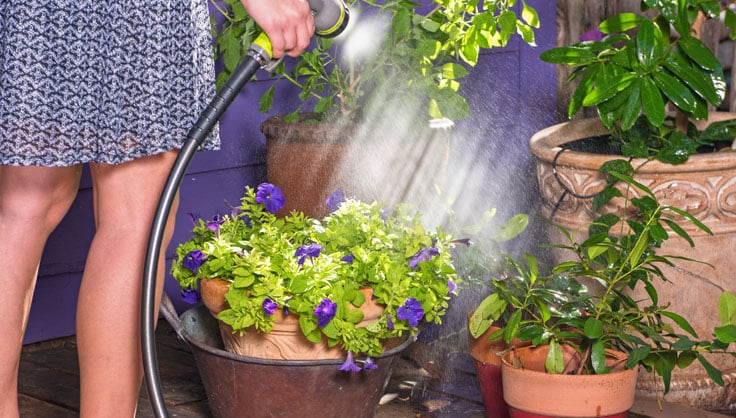
A friend once had a summer job at one of New England's premier nurseries. He told me that the nursery owner always had his new employees spend the first two weeks doing nothing but watering plants. By teaching his staff how to water a plant properly, the owner ensured the health and vitality of his inventory. But he also used this initiation period to identify the best employees: people who paid attention.
When it comes to watering, there are no hard or fast rules. It's a judgment call that depends on the type of plant, the soil, the weather, the time of year and many other variables. Fortunately, it's easy to figure out what to do — even for a teenager on a hot summer day. You just need to check the soil.
If you're working in a nursery, you lift each pot before you water. Over time, you get to know how heavy a pot should feel if the soil inside the pot is thoroughly moistened. If it's not heavy enough, you water slowly until all the soil in the pot is moist and water runs out the bottom. Then you lift the pot again to check that it feels right.
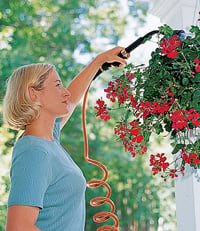 After thoroughly watering a hanging basket lift it to get a sense for how heavy it should feel. When it feels light, it's time to water.
The Best Way to Water
Watering is of no value if the water runs down the outside of the root ball, leaving the roots at the core of the plant dry. This can happen if you water too quickly or apply too much water at once. Slower watering is usually more effective. The key is to ensure that water gets to the root zone — whether you are tending seedlings, watering houseplants, watering a row of tomatoes or soaking thirsty shrubs and trees.
You can't use the "lift test" in your garden or landscape, but you can use a soil moisture sensor to see if it's time to water. For a thorough investigation, push a spade into the soil near your plant and pull it back to see how the soil looks. If it feels moist to a depth of 6 to 12 inches, you're in good shape. If it's bone dry, water!
Six Tips For Watering Your Garden
- Focus on the root zone. Remember that it's the roots that need access to water, not the leaves. Wetting the foliage is a waste of water and can promote the spread of disease.
- Water only when needed. Automatic watering timers are especially useful; just make sure to watch the weather, and reduce frequency when rainfall is abundant. Too much moisture can be just as damaging to plants as too little.
- Water deeply and thoroughly. Lawns and annuals concentrate their roots in the top 6" of soil; for perennials, shrubs and trees, it's the top 12". In heavy soil, it may take hours for water to percolate down 6-12". Use your finger or a shovel to check the progress.
- Water in the morning. If you do get moisture on the leaves, this gives them time to dry out. It's much more difficult for plant diseases to get a foothold when the foliage is dry.
- Mulch everything. Mulch reduces surface runoff and slows evaporation from the soil.
- Use the right tool. For efficient watering at the root zone, use a soaker hose or an even more precise drip irrigation system instead of a sprinkler.
Print this Article:
Get the Dirt
Stay up to date on new articles and advice. Please fill out the information below.