
Common Tomato Problems — and Simple Solutions!
A guide to diagnosing & treating the most common issues with tomato plants
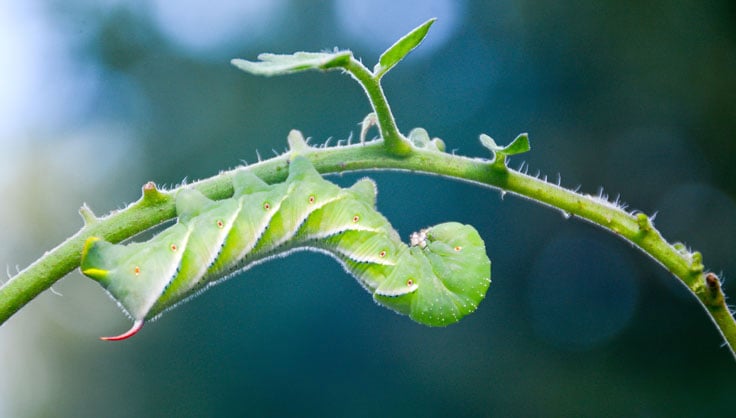 Tomato hornworm
Fresh, vine-ripened tomatoes are one of the great joys of summer. However, sometimes diseases, pests and/or environmental stresses get in the way of our tomato harvests. Even the best-cared-for plants can be plagued by problems. Diagnosing the culprit is the first step — is it a disease? An insect? An environmental condition? Here are some of the most common tomato problems and recommended solutions. Keep in mind that problems with your tomatoes will depend on many factors, including your soil and climate, as well as localized disease and insect pest outbreaks.
Signs of Common Tomato Problems:
Common Tomato Problems
Why do my tomatoes have black, sunken patches on the bottom?
Fruit with black sunken areas on the blossom end are a sign of blossom-end rot. Although it looks like a disease, blossom-end rot is caused by a calcium deficiency — sometimes the soil is lacking calcium, but more often than not, there is plenty of calcium available, but the plant cannot take it up. This is usually aggravated by drought or uneven watering, root damage, and/or excess nitrogen. Fortunately, blossom-end rot will usually occur on just a small number of fruit, especially at the beginning of the harvest season. To prevent it, maintain a frequent, regular watering schedule so plants do not dry out. Amend your soil with a calcium-based fertilizer, or try a ready-to-use spray called Tomato Rot-Stop, which is an all-natural formula for blossom-end rot.
Read on and learn more about blossom-end rot.
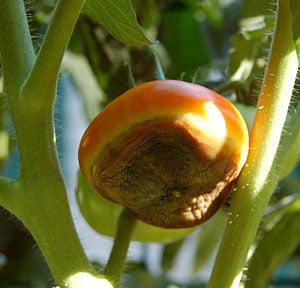 Blossom-end rot. Photo: Susan Romanoff
Why are my tomato plants dropping flowers before they set any fruit?
The most common cause of plants dropping flowers is temperature, so the problem usually resolves itself when weather improves. If that does not resolve the problem, there are a few potential causes:
- Nighttime temperatures above 70 degrees F or below 50 degrees F
- Daytime temperatures above 85 degrees F
- Drought stress
- Excess nitrogen
- Lack of pollination
Why do the leaves of my tomato plant have dark rings on them?
Dark, concentrically ringed spots that cover the lower leaves and stems are a sign of early blight. To prevent and control the spread of blight, spray with Actinovate or Copper Fungicide. Also, limit the spread of the disease by not getting water on the leaves when watering and not handling plants when they are wet.
Read on and learn more about early blight.
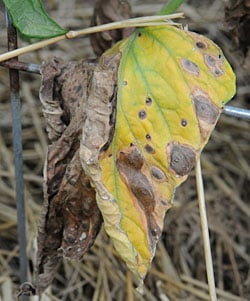 Early blight disease on a tomato leaf, indicated by the concentric rings.
Why are there water-soaked lesions on my tomato plant?
Water-soaked patches and lesions on stems, foliage and fruit are signs of late blight. Outbreaks spread quickly under favorable conditions because the pathogen can produce huge numbers of wind-dispersed spores. Track outbreaks on the map at usablight.org. When late blight is detected in your region, consider preventative spraying with Actinovate or Copper Fungicide.
Read on and learn more about late blight here.
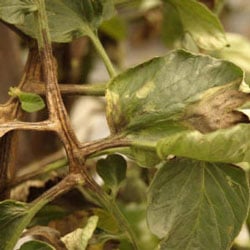 Late blight disease can manifest as blackened stems and foliage.
Why are there holes in my tomato plant?
Holes chewed in leaves and fruits can indicate the presence of a tomato hornworm. This large caterpillar has white diagonal stripes and a black horn projecting from the rear. Handpick these caterpillars (drop them in soapy water as you pick them).
Holes chewed in tomatoes can be the work of slugs. There is nothing worse than picking a tomato and finding a slug happily working its way through it. Slugs can be thwarted with iron phosphate-based slug pellets and beneficial nematodes.
Learn more about the tomato hornworm and slugs.
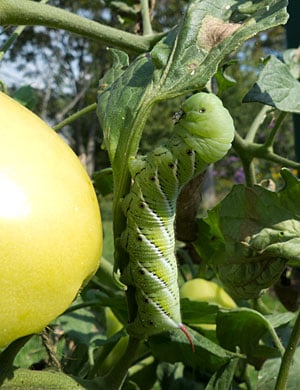 The tomato hornworm is relatively easy to control.
Small holes in fruit and tomatoes that collapse when you pick them might be the work of tomato fruitworms. These moth larvae bore into fruits and consume them from within. Once the larvae are in the fruit, the only remedy is to destroy the infected fruit. If fruitworms are a severe problem in your area, start the plants under row covers and keep them covered until they flower.
Why do my tomatoes have cracks in them?
Cracks in fruit are generally caused by uneven watering. Use a soaker hose or irrigation system, to apply water directly to the soil, moistening the entire root zone each time you water. Apply mulch to help retain moisture.
Learn more about cracking in tomatoes.
Why are the leaves of my tomato plant curling and turning yellow?
Yellowed, distorted and curled leaves may be a sign of an infestation of aphids. Check for aphids on the undersides of leaves or clustered on new growth. Aphids are easily controlled with a strong jet of water or an application of neem oil.
Read on and learn more about aphids.
Why are the leaves of my tomato plant wilting?
Wilting foliage might be a sign of insufficient water. But if the lower leaves are wilted and plants are stunted and do not recover after watering, fusarium wilt is likely the cause. Infected plants should be removed and discarded (not composted).
Read on and learn more about fusarium wilt.
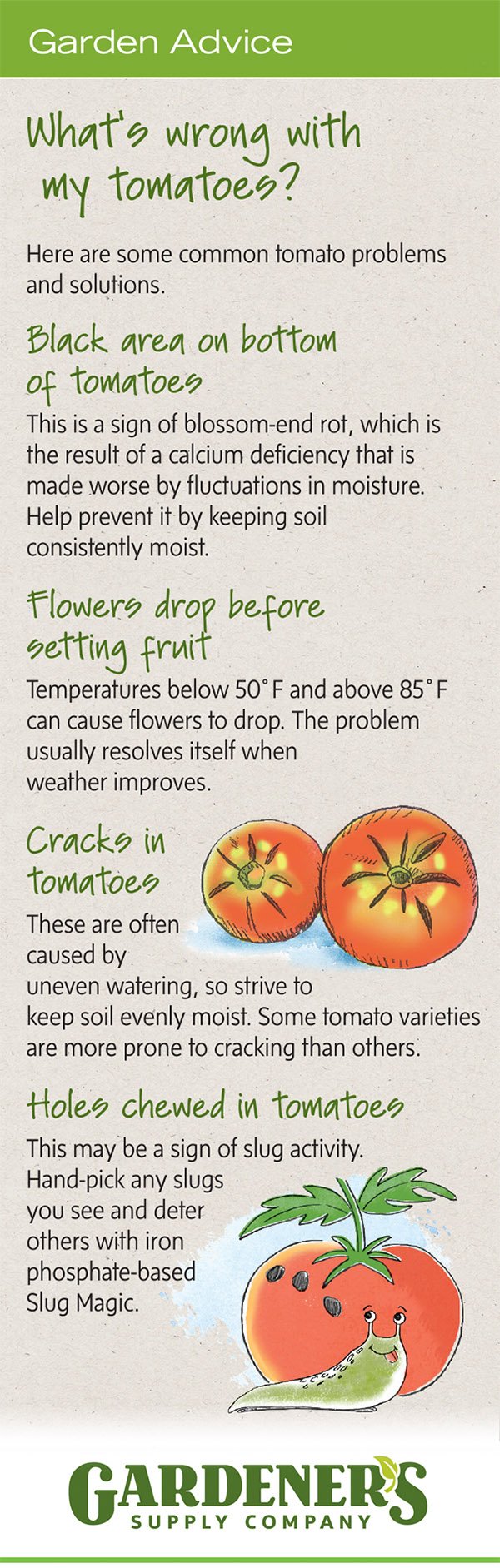 On Pinterest? Pin this image for later!
Print this Article:
Get the Dirt
Stay up to date on new articles and advice. Please fill out the information below.