
Urban Vegetable Gardening
How to grow veggies in pots and planters
Last updated: April 23, 2025 | 5 min read
For some gardeners, growing vegetables in containers is a necessity. Urban gardening often means growing on rooftops, balconies, alleyways, sidewalks or whatever little space the gardener has available. Gardeners with physical disabilities find that growing vegetables in containers makes them far easier to reach and tend. Difficult soil conditions (sand, stone, clay) makes growing vegetables especially challenging. And even in urban areas, gardeners often find container gardening is a way to avoid sharing their harvest with deer, rabbits and woodchucks.
If you are new to growing vegetables in containers, or have had limited success, here are a few tips to help you succeed.
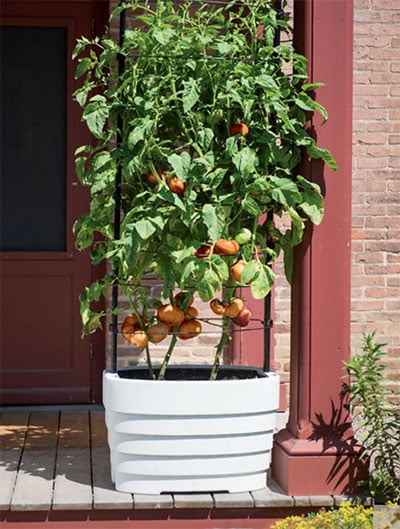 Self-watering planters reduce watering chores and keep soil consistently moist.
Selecting a Container
As a general rule, select as large a container as possible. Small containers dry out more quickly and may need daily watering. Self-watering planters designed for urban balconies and patios extend the time between waterings. You'll want to think about weight — once the pot is filled with wet soil and plant material it's going to be very heavy. And you may want to think about appearance. What look "goes" with your house and other pots? Even fabric pots are good for growing vegetables. With colorful Grow Bags, you can add some whimsy to your vegetable garden.
Most importantly, you'll need to think about the depth of the container you'll be growing in. Plants with deep root systems will be stunted and unhealthy if they don't have adequate space. (See the list below.)
Remember that the deeper the pot, the larger the reservoir of moist soil and the less often you'll need to water. The exception is a self-watering planter. In this case, the depth of the planting area can be kept to a minimum because moisture is provided by a water reservoir below the planting area.
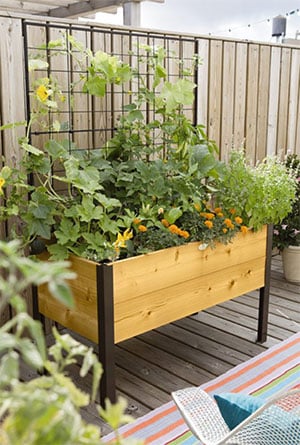 This elevated planter box is perfect for small-space vegetable growing.
Where to Put Your Planter
Most vegetables require at least six hours of sunlight per day. Salad greens and herbs can usually get by with less. Tomatoes, peppers, beans and other sun-lovers will appreciate as much sun as they can get. If your yard is short on sun, consider putting your plants on caddies or adding casters. That way they can be moved during the day or even later in the season as the angle of the sun changes.
Wind is another factor to consider. Your plants will be happiest in a protected location where the wind doesn't batter and dry out their foliage. Use the shelter of a building, or erect a temporary windbreak made from portable fencing or fabric. Arrange your pots so larger plants shield smaller plants. Clustering potted plants also helps to raise humidity levels, keeping plants more productive.
If you are using a trellis or some other type of support in your container, wind is a special concern. Make sure you have a heavy pot and/or that the trellis is secured to a railing or some other fixed upright.
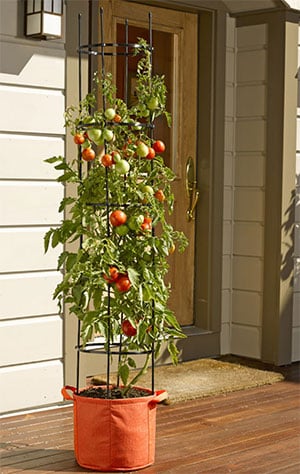 The Gardener's Best Tomato Grow Bag Set has an integrated cage.
How to Choose Soil or Potting Mix for Your Planters
Do not fill your containers with soil from your garden or bagged topsoil. You should fill the containers with a "soilless" potting mix that will retain moisture and resist compaction. I usually mix in a liberal amount of granular organic fertilizer and a shovelful or so of compost.
Watering Your Container Vegetable Garden
Vegetables require a consistent supply of water to perform their best. Inconsistent moisture causes lots of problems, such as blossom drop, poor root development, leaf curling, insect problems, and rot. The best way to ensure your plants always have a consistent supply of water is to use a self-watering planter. Filling the reservoir every few days is all that's required. The plants absorb moisture as they need it.
Fertilizing Your Vegetable Planters
Fertilizer is especially important when you're growing vegetables in containers. In fact, you just won't succeed if you don't use some kind of fertilizer. I recommend mixing a granular organic fertilizer into the soil when planting, then weekly feeding with a water-soluble fertilizer, such as Plant Health Care.
There are several reasons why fertilizer is important. First is that the growing medium in the container has few, if any, nutrients. Your plants depend on you to provide the nutrients they need. Second is that containerized plants get watered a lot, and every time you water you wash some nutrients from the soil.
The third reason fertilizers are necessary is that in a container garden, you are packing lots of plants into a small space. One 2' x 2' self-watering planter might contain a tomato plant, two pepper plants, a basil plant and some parsley. That's a lot of foliage and fruit to feed from a few gallons of "soil".
The Best Vegetables for Containers
Potatoes, chard, lettuce, cherry and bush tomatoes, peppers, eggplants, summer squash, Asian greens, pole beans. And don't forget herbs!
Here are the minimum soil depths for healthy growth. Keep in mind that you can get by with less depth if you use a self-watering planter.
- 4-5": chives, lettuce, radishes, other salad greens, basil, coriander
- 6-7": bush beans, garlic, kohlrabi, onions, Asian greens, peas, mint, thyme
- 8-9": pole beans, carrots, chard, cucumber, eggplant, fennel, leeks, peppers, spinach, parsley, rosemary
- 10-12": beets, broccoli, okra, potatoes, sweet corn, summer squash, dill, lemongrass
Plant Combinations and Companion Planting
This is the fun part. As part of our summer display gardens, we usually plant a few containers with a broad assortment of vegetables and herbs. Some of them are "theme" pots (an Italian pot, a spicy pot, a pickles pot), some are planted for maximum production (lettuce followed by beans, followed by broccoli, followed by winter greens), and others are focused on a single crop (tomatoes, strawberries, potatoes).
When combining several different types of plants in one pot, it's best to match plants that have a similar need for water and fertilizer. For example, rosemary, which likes hot and relatively dry conditions, would not be a good match with water-hungry cucumbers. To maximize space, you might want to combine a trailing plant with an upright plant.
Some plants actually grow better when grown near a compatible companion. On the other hand, some plants don't seem to grow as well when paired with certain plants. Sometimes the reasons are simple (carrots, dill and fennel are all in the same plant family and will compete for the same nutrients) but others are more mysterious. The list below offers good plant combinations — as well as combinations to avoid.
Good Companion Plants:
- Beans, carrots, squash
- Eggplant, beans
- Tomatoes, basil, onions
- Lettuce, herbs
- Spinach, chard, onions
Combinations to Avoid:
- Beans with onions and garlic
- Carrots with dill or fennel
- Tomatoes or squash with potatoes
- Onions with beans and peas
Print this Article:
Get the Dirt
Stay up to date on new articles and advice. Please fill out the information below.