
Meet Will Raap, Founder and Chairman
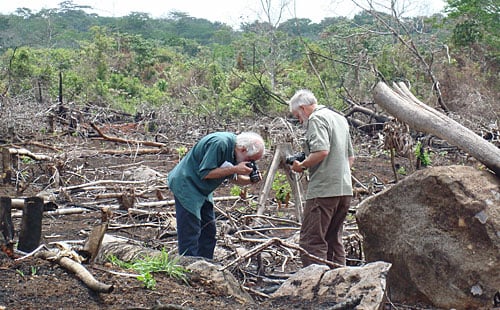 Evaluating tropical soils in Costa Rica to understand the impacts of reforestation. Tropical ecologist Dan Janzen, left, and soil scientist John Kimball.
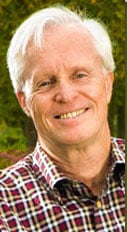 Will Raap
When Gardener's Supply began, in 1983, I hoped our company could be a positive force for change. Over the years, we've encouraged millions of people to get their hands in the soil and grow their own food, create beautiful, earth-friendly gardens and "in the process" become backyard environmentalists and land stewards.
As the Gardener's Supply business grew, I also helped to establish a nonprofit organization to reenergize Vermont's food system. The Intervale Center was established on a large parcel of forgotten land adjacent to the Gardener's Supply headquarters in Burlington, Vermont. Over the years, the Intervale Center has helped to restore 350 acres of farmland and has cultivated a vibrant community of more than a dozen small farms. Now, with Gardener's Supply owned by its employees and the Intervale Center recognized nationally as a catalyst for the local, organic food movement, I have turned my attention to a new collection of projects that are restoring local food and energy systems while promoting sustainable land use, especially on degraded land.
Restoring Our Watershed (ROW) is a nonprofit organization working in the Nandamojo River Valley of Guanacaste, Costa Rica. Founded in 2001, ROW has a two-pronged approach: reclaiming degraded land and reinvigorating local, sustainable food production to create green jobs. One of the ways ROW is reinvigorating the local economy is through a micro-lending program. By financing sustainable farming and forestry projects, these loans are helping residents make a living by producing honey, eggs, poultry, vegetables and other foodstuffs. As locally produced food products become more available, the community is rallying around the producers and is becoming energized by a new sense of community that comes from renewed access to local food.
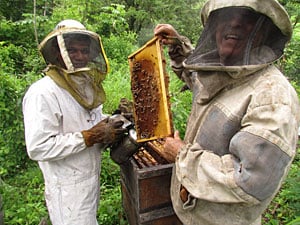 With support from ROW's micro-loan fund, Jaime Zu?? Leal and Maritza More Valverde bought 15 beehives. The business partners live in La Florida, Costa Rica, a small watershed village of about 360 residents.
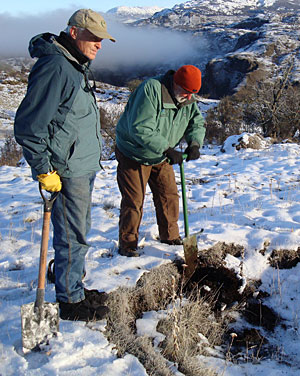
The Earth Partners (TEP) is a consortium of ecologists and soil scientists working to restore degraded ecosystems around the world. We are demonstrating how millions of acres of degraded land can be put to work as highly productive cropland, forests and wetlands that will increase soil fertility and food security, clean our air, purify our water, and increase biodiversity while mitigating the impact of climate change. TEP has developed a methodology for measuring soil carbon that has been tested and refined at more than 20 sites in North and South America, Central America and Europe. This soil and ecosystem carbon quantification methodology has been independently validated and meets Verified Carbon Standard validation for the Carbon Marketplace. Research has been supported in part by a Conservation Innovation Grant from the U.S. Department of Agriculture, with initial application of the soil carbon quantification method in the Paulouse grasslands of Idaho, Washington and Oregon.
Reforest Teak manufactures high quality, weather-resistant furniture using wood from sustainably managed tropical forest plantations. By restoring damaged and depleted lands to ecological productivity, Reforest Teak is providing innovative alternatives to the global environmental crisis. All profits from the sale of Reforest Teak products are invested in protecting and restoring tropical forests in Central America.
Land Restoration through "Conservation Development"
I am involved with three developments that are demonstrating new strategies for restoring degraded lands to ecological health and productive use.
 A single-family home at South Village
In Vermont, South Village is a suburban conservation development on an abandoned 220 acre dairy farm. Houses have been clustered to create a walkable community, and 75 percent of the land has been left open for an onsite organic farm, a 1-acre solar array, walking trails and 100 acres of restored wetlands.
In Costa Rica, Pueblo Verde is converting a poorly executed reforestation plantation into a mixed-use forest of native trees, integrated with low cost housing. Nearby, Tierra Pacifica is restoring the degraded soils and watersheds on an old cattle farm. Soil erosion has been dramatically reduced by a series of catchment dams and basins that feed ponds and estuaries. Tierra Pacifica is also home to a 5-acre organic farm that serves local markets and helps support other local farms.
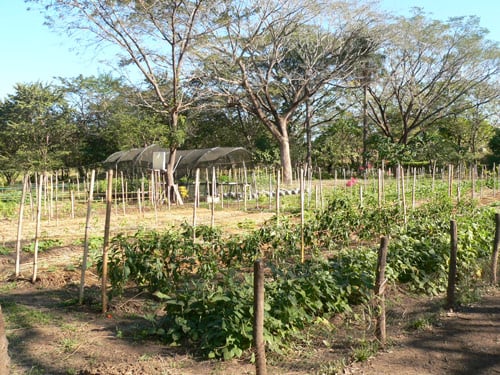 The Tierra Pacifica organic farm in Guanacaste, Costa Rica
Print this Article:
Get the Dirt
Stay up to date on new articles and advice. Please fill out the information below.