
How To Grow Blue Hydrangeas
It's all about soil chemistry
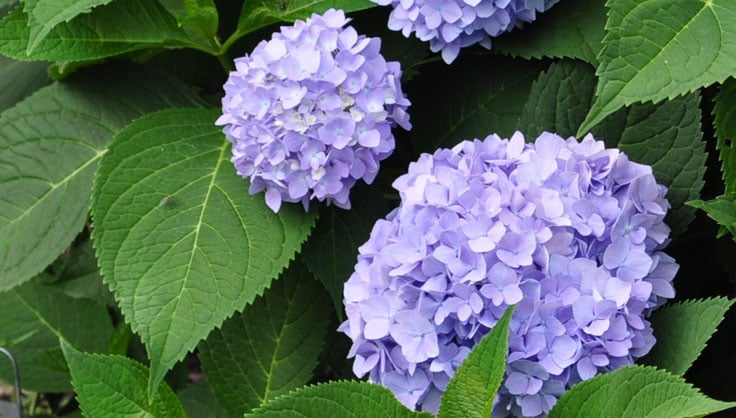
You may have heard that you can change the color of a hydrangea's flowers by adjusting soil pH. But there's a little more to it than that.
First of all, not all hydrangeas produce blue flowers. Hydrangeas with white or cream flowers, such as Annabelle hydrangeas, oakleaf hydrangeas and members of the PeeGee family, can only produce white or cream flowers. Sometimes their blooms take on a pink tinge at the end of the season, but that's about as colorful as they get.
Hydrangeas with bloom colors that range from pink through blue and purple usually belong to the hydrangea cultivars known as mopheads and lacecaps. These types of hydrangeas have the interesting ability to change the color of their blooms based on the chemistry of the soil. When grown in alkaline soil, the bloom colors are pinker. When grown in acidic soil, the bloom colors are bluer. Watch below, as Laura from Garden Answer highlights 16 gorgeous hardy hydrangeas!
It's All About Soil Chemistry
Because it's the soil chemistry that determines the bloom color, the variety names given to these types of hydrangeas means very little when it comes to bloom color. For instance, Nikko Blue, Pretty in Pink, Forever Pink and Blue Deckle, all have an almost equal chance of blooming pink or blue, depending on the soil they are planted in. So remember — even if you purchase a hydrangea in bloom, you cannot be sure the plant will produce the same color flowers once it's growing in your garden.
To manipulate the color of a hydrangea's blooms, you need to manipulate your soil's pH level and mineral content. This is not something you do just once. In order to maintain growing conditions that result in a specific bloom color, you may need to apply special soil amendments several times during the growing season (see How to Adjust the pH of Your Soil, below).
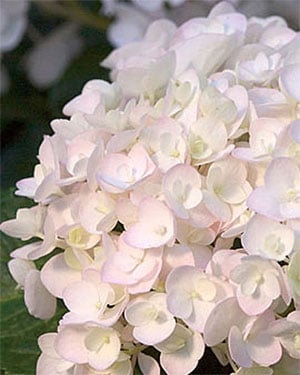 Blushing Bride produces blooms throughout the season on both new and old stems. Flowers are blush pink or deep blue as they mature, depending on your soil pH.
To really experiment with the color of a hydrangea's blooms, consider growing the plant in a large container. Because you will be working with a much smaller amount of soil, it will be much easier to maintain the desired soil chemistry.
Start by testing the pH of your soil. This will give you an idea how much of an uphill battle you'll be waging. Be mindful that the health of the plant should be your first priority. It's quite difficult to make a dramatic change in soil pH, and doing so can adversely affect the overall health of the plant.
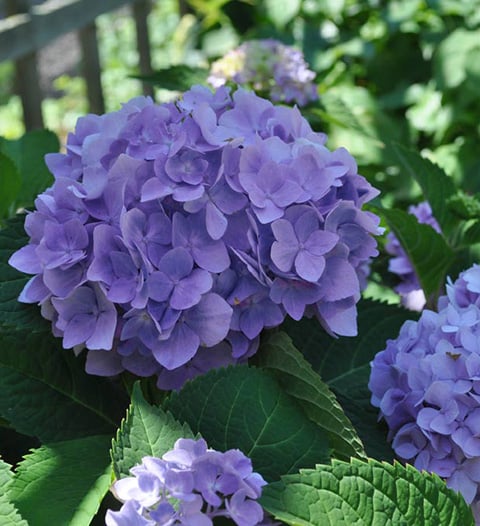 Blue hydrangeas like moist soil and some light shade during the hottest part of the day.
What Makes Hydrangeas Blue?
To encourage blue hydrangea flowers, grow the plant in soil that has a pH of 5.2-5.5. If your soil is more alkaline, you can lower the pH by applying Soil Acidifier at the rate specified on the package. Soil pH can also be lowered (more gradually) by applying an acidic organic mulch, such as pine needles or pine bark.
If the pH of your soil is naturally quite high (alkaline) it will be very difficult to get blue flowers — even if there's plenty of aluminum in the soil. Alkaline soil tends to "lock up" the aluminum, making it unavailable to the plant. (However, you can grow fabulous pink hydrangeas!)
What Makes Hydrangeas Pink?
If you prefer pink blooms, your hydrangea should be deprived of aluminum by growing it in an alkaline soil with a pH of 6.0-6.2. You can apply a high-phosphorus fertilizer to further discourage the uptake of aluminum. To raise the pH of a naturally acidic soil, apply Garden Lime at the rate specified on the package.
How to Adjust the pH of Your Soil
Once you've tested the pH level of the soil where you intend to plant your hydrangea using a pH test kit, pH meter, or by submitting a soil sample to your local extension service, you'll have a baseline. If you are trying to maintain a certain pH level, you should test your soil each year. The effect of adding materials to raise or lower the pH may not be immediately apparent. You should also expect that over time, the pH will revert to its original level, which is dictated by the native soil conditions.
To Raise Soil pH
The most common way to raise the pH of your soil (make it more alkaline and less acidic) is to add powdered Garden Lime. Dolomitic limestone will also add magnesium to the soil. Apply it in the fall as it takes several months for the effects to be noticeable.
Wood ash will also raise soil pH. It works more quickly than limestone and adds potassium and trace elements to the soil. But use caution when applying wood ash. It is very concentrated, and applying too much of it can drastically alter the pH and cause nutrient imbalances. Wood ash can also "burn" foliage, so for best results, apply it directly to the soil in the winter. Apply no more than 2 pounds per 100 square feet, every two to three years, and test your soil each year to monitor the effects.To raise the pH of your soil by about one point:
In sandy soil: add 3 to 4 pounds of ground limestone per 100 square feet.
In loam (good garden soil): add 7 to 8 pounds per 100 square feet.
In heavy clay: add 8 to 10 pounds per 100 square feet.
To Lower Soil pH
Soil can be made more acidic by adding Soil Acidifier, ammonium sulfate or aluminum sulfate. Follow application rates on the packaging. You can also lower pH levels by incorporating naturally acidic organic materials such as conifer needles, sawdust, peat moss and oak leaves. Coffee grounds are also slightly acidic. Remember to retest your soil to monitor effects over time. To lower soil pH by about one point using elemental sulfur:
In sandy soil: add 1 pound ground sulfur per 100 square feet.
In loam (good garden soil): add 1.5 to 2 pounds per 100 square feet.
In heavy clay: add 2 pounds per 100 square feet.
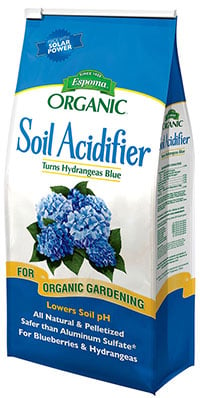 Soil Acidifier enhances the blue color in hydrangeas.
Print this Article:
Get the Dirt
Stay up to date on new articles and advice. Please fill out the information below.