
What is Pruning: An Intro to Pruning

Last updated: July 12, 2023 | 6 min read
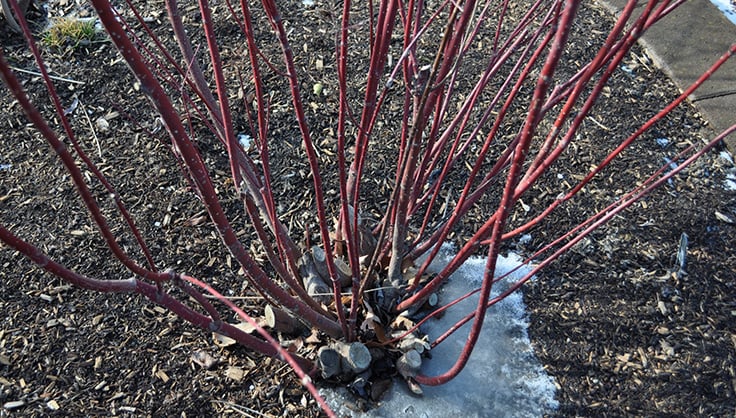 Red-twig dogwoods show the brightest color on young shoots. Pruning out some of the old branches — right to the ground — ensures a colorful display.
When spring is in the air, you might be itching to get outside and do a little yard work. Pruning is a perfect chore for late-winter and early spring because most trees and shrubs are dormant. What's more, it's the time of year when there are few gardening tasks on your list.
What to prune? The prospect can be daunting — even to experienced gardeners. But, with a few simple guidelines, even a beginner can prune ornamental shrubs successfully. In general, your goals are:
- Establish and maintain structure and size
- Improve flowering and fruiting
- Remove the five D's: dead, dying, damaged, disfigured or diseased wood
It's important to identify each shrub or tree before you prune. If you don't know what it is, find a neighbor that can help you, or take a branch to a local garden center for identification. (It's easier to identify a tree or shrub during the growing season; plan for next year's pruning jobs by identifying the plants this summer.)
Why? Some shrubs should not be pruned in spring. In general, spring bloomers, such as magnolias and lilacs, should be pruned after they bloom. If you prune in spring, you'll most likely cut off the dormant buds, and there will be no flowers. For these early-flowering shrubs, just look for dead or damaged wood and remove it.
Pruning is an intimidating topic for many gardeners. But with the right information and sharp tools, you'll be ready to make the cuts.
Pruning FAQ
- Where do I start?
- What tools do I need?
- Where do I make the cut?
- When should I prune flowering shrubs?
- Hydrangeas are confusing. When do I prune those?
- When should I prune fruit trees?
- How do I prune evergreens (conifers)?
- How do I remove heavy branches?
- Do I need to paint the wounds?
- How do I restore overgrown fruit trees or hedges?
- When should I call a professional?
After many years working as a professional horticulturist, I've often been asked about pruning. Here are the questions I hear most:
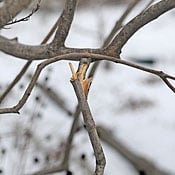 Check shrubs for dead or damaged wood and prune it out.
Where do I start?
Begin by removing the 5 D's: dead, dying, damaged, disfigured and diseased wood. You can do this at any time of year. Cut these twigs and branches back to healthy wood — or to the ground. After that, look for branches or twigs that cross and rub on one another. Remove one of them, leaving the healthier or better-placed branch.
If you are tackling a big, overgrown deciduous shrub with lots of stems, remove the oldest stems by cutting them right to the ground. You can cut down about 1/4 of the stems each year to rejuvenate the shrub.
What tools do I need?
In general, you only need a few basic pruning tools. For the health of your trees and shrubs, it's important to keep the blades clean and sharp.
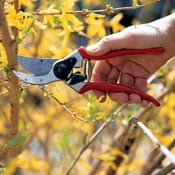
- Hand pruners are the basic tool for most jobs and can cut branches up to 3/4" in diameter. Choose either bypass pruners, which cut with a clean, scissors action, or anvil pruners, which have a blade that presses against a bar.
- Loppers resemble hand pruners with long handles. They're useful for reaching down into tangled shrubs or overhead to just-out-of-reach limbs. They can cut limbs up to 1-1/2" in diameter, depending on the model.
- Pruning saws have special blades that cut on the pull stroke and self-clean to prevent binding in fresh, sap-filled wood. Choose a handheld saw for work at ground level or invest in a pole-mounted saw for overhead cuts.
- Hedge shears have long, scissors blades for trimming hedges. They'll cut twigs up to 1/2" in diameter.
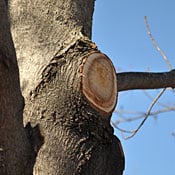 Cut at the branch collar.
Where do I make the cut?
Pruning involves only two kinds of cuts: heading and thinning. Heading cuts remove shoots or branches back to stubs, buds or smaller lateral branches. These cuts usually cause the plant to respond vigorously with bushy new growth. Shearing a hedge, deadheading flowering plants and pinching out the tips of plants to encourage branching are all examples of heading cuts.
A thinning cut removes a branch back to its origin or to a lateral branch that's at least one-third of the removed-limb's diameter. Thinning cuts leave the pruned plant with a natural appearance.
When you cut a twig or branch back to the trunk or to a lateral branch, it's important cut at just the right place. Look for a raised bump or rings around the base of the twig or branch and take care to cut just outside it, leaving the ring intact. It's called the branch collar, and this is where the scar tissue forms to heal the wound.
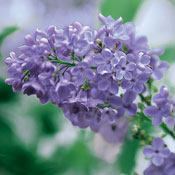 Lilacs should be pruned after they bloom.
When should I prune flowering shrubs?
Timing is based on when your shrubs bloom. As a general rule, you prune summer-flowering shrubs in the spring and spring-flowering shrubs in the summer. Why? Shrubs that bloom in spring to early summer, such as lilacs and forsythia, develop flower buds in summer, the year before they bloom. If you prune them in the fall, winter or spring, you'll cut off their flower buds. Prune plants in this group as soon as they finish flowering in early summer.
Shrubs that bloom in the summer, such as roses and butterfly bush, develop flower buds on the current season's growth. Prune this group while they're dormant in late winter to early spring to encourage vigorous new growth and lots of flowers.
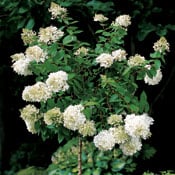 The PeeGee hydrangea can be pruned in early spring because flowers form on new wood.
Hydrangeas are confusing. When do I prune those?
Some hydrangeas bloom on current season's growth and should be pruned in the spring. These include H. arborescens 'Annabelle', and H. paniculata cultivars, such as PeeGee, Pink Diamond and Limelight, that bloom from mid- to late summer.
Oakleaf (H. quercifolia) and bigleaf hydrangea (H. macrophylla), including Nikko Blue and all the other pink- and blue-flowering cultivars, bloom from buds set the previous year. If they need pruning to maintain size or shape, do it only in the summer, preferably before August. The so-called ever-blooming hydrangeas, such as the Endless Summer series, should be treated the same.
How do I prune evergreens (conifers)?
Most conifers or needled evergreens rarely need pruning, except to remove the 5 Ds. If you must prune them, do it in the early spring to early summer. The timing and technique depend on the type of conifer. Pine, spruce and fir grow whorls of branches around their trunks. Pinch the tips of the soft, new growth before the needles expand and harden. Don't cut into old wood?it won't regrow from new buds.
Arborvitae, false cypress, cypress, juniper and yew have more random branching and can sprout new growth from older wood. Pinch, prune or shear new spring growth, or prune twigs back to the branch.
 Careful pruning of fruit trees ensures a bigger crop.
When should I prune fruit trees?
The best time to prune fruit trees is late winter to early spring, while they're still dormant. The goal is to establish a sturdy branch structure that supports the heavy fruit while letting light and air into the canopy. The ideal branching structure varies, depending the type of fruit and the size of the tree (full-size, semi-dwarf or dwarf). A Master Gardener from your local Cooperative Extension office is a good resource to consult.
How do I remove heavy branches?
When pruning, it's important to limit the size of the wound. To prevent the bark from tearing down the trunk when removing a heavy limb, use the three-cut method.
- Starting 6-12" from the trunk, use a pruning saw to make a cut about one-third of the way through the underside of the branch.
- About 12-18 from the trunk (6? from the undercut), cut through the entire limb. This should leave a 12-18" stub.
- Support the remaining stub with your free hand. Saw from top to bottom, just outside the bulge or ring where the branch joins the trunk.
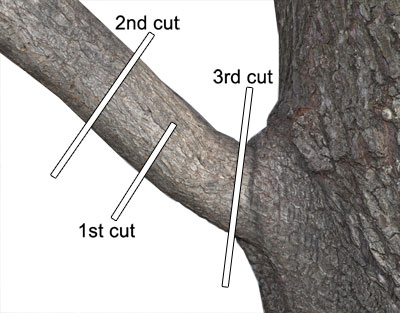 Remove heavy branches by making three cuts.
Do I need to paint the wounds?
No, trees and shrubs heal themselves by partitioning off the wound and forming scar tissue around it. Painting or sealing the wound can hinder this process and increase the chances of disease and decay.
How do I restore overgrown fruit trees or hedges?
If you want to take on complex pruning jobs — such as restoring fruit trees or shaping hedges — it makes sense to consult a detailed reference on the subject. I recommend The Pruning Book by Lee Reich.
When should I call a professional?
Some pruning is dangerous and better left to trained, licensed and insured professionals. Hire an arborist if:
- Branches or trees are near utility wires, or could fall on a building or into the street. Call the utility company or the road maintenance department for help.
- Limbs are too high to reach from the ground with a pole pruner. Never go up a tree or a ladder with a chain saw.
- The job requires power equipment. Removing big limbs incorrectly can hurt you and the tree.
- The job is complex and you are inexperienced. Most landscaping companies offer pruning services for any size job.
Print this Article:
Get the Dirt
Stay up to date on new articles and advice. Please fill out the information below.