
How To Identify, Prevent & Control Aphids
What to do when you have an aphid infestation
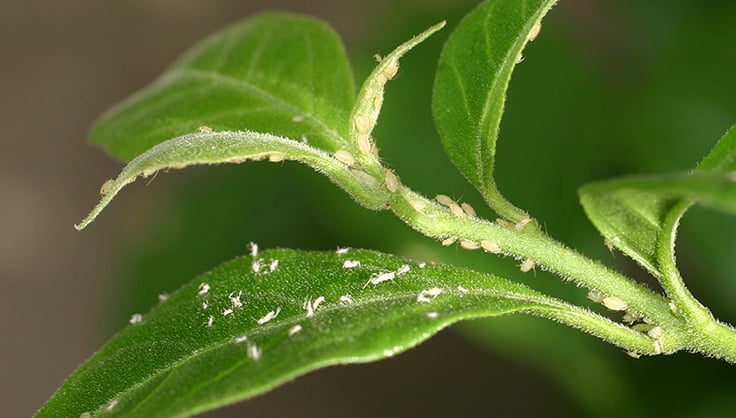 One of the most common plant pests, aphids tend to congregate on new growth where they suck plant juices and secrete sticky "honeydew." These aphids are pale green; the white bits are the skins they left behind after molting. Aphids are common throughout the U.S.
How to Identify Aphids
Are your plants covered with little green or white bugs? It could be the beginning of an aphid infestation. Here's how to identify, prevent, and control aphid infestations, so your plants stay happy and healthy!
Aphids are small, soft-bodied, pear-shaped insects that cluster densely on tender new growth and the undersides of leaves to suck plant juices. Plants often can withstand some aphid feeding with no adverse effect, but badly infested plants develop distorted growth and leaves may turn yellow or drop off.
Many species of aphids feed on home garden plants; these insects range in color from pale green, pink, or black to red or yellow. Size is typically 1/16" to 1/4". Adult aphids are generally wingless, but winged adults will appear when overcrowded. Immature aphids (nymphs) closely resemble adults.
Both adults and nymphs feed on a wide variety of both outdoor plants and houseplants, including most edibles and ornamentals. In small numbers aphids do little damage, but they are able to reproduce rapidly and can quickly become a more serious problem. Also, as they feed, aphids secrete a sweet fluid called honeydew that can attract ants; sooty black fungus may grow on coated leaves.
How to Identify an Aphid Infestation
Sometimes it takes close inspection to discover an aphid infestation. They blend in so well with foliage that you may not spot them at first glance, even though hundreds are present. One of the reasons aphids can reproduce so quick is that at certain times of year, female aphids give birth to live young. In just a few weeks these young reach maturity and give birth — a short cycle of reproduction that results in an exponential population growth!
It's often easier to detect aphids on houseplants, but for both indoor and outdoor plants, the best way to catch and deal with aphids before they get out of control, is simply to do a quick weekly inspection of your plants.
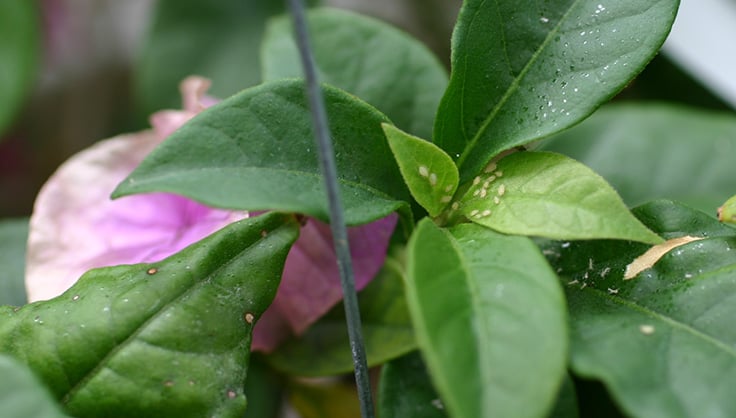 Aphids cluster on tender new growth, where they suck the sap, weakening the plant.
How to Prevent and Control Aphid Infestations
- When fertilizing your garden, avoid applying too much nitrogen, which can stimulate plants to grow too rapidly and produce a flush of exactly the kind of tender new growth that aphids love.
- Attract and release beneficial insects, such as ladybugs and lacewings, which will be happy to devour a bountiful supply of aphids.
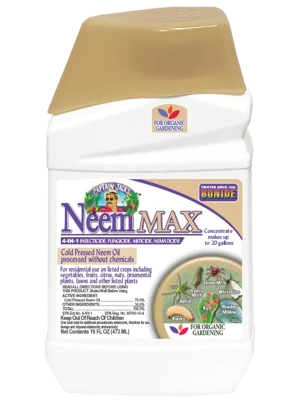
- Use a spray with neem oil, which is derived from the seed of the neem tree. It controls a wide variety of common garden insect pests such as aphids as well as fungal diseases.
- Use a strong spray of water from your hose to dislodge aphids from affected plants. This will reduce their numbers dramatically. Recheck the plants a few days later and repeat the treatment if needed. (Keep in mind that water sprays will also kill beneficial insects.)
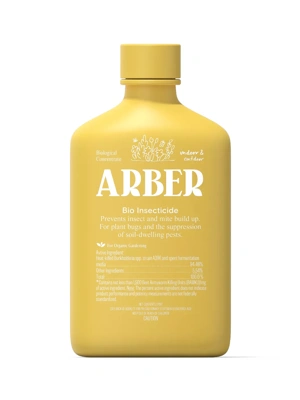
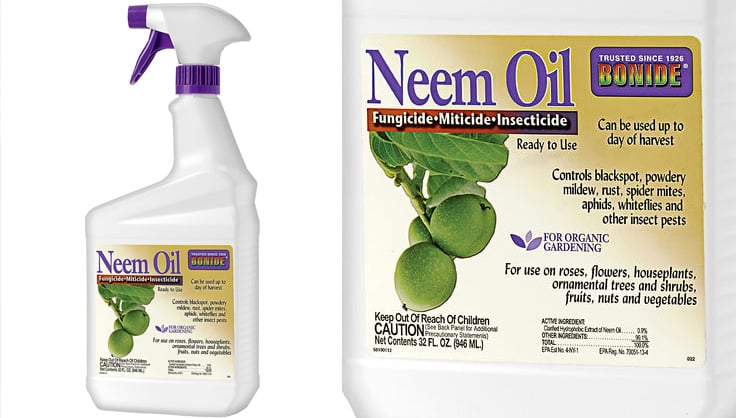 Neem Oil Spray, derived from the seed of the tropical neem tree, is a remarkable, multipurpose pest control spray. It works on a wide variety of pests, including houseplant pests, such as aphids, spidermites, mealybugs, and scale. It also controls diseases, such as powdery mildew.
Last updated: 07/03/2023
Print this Article:
Related items
Related Articles

Get the Dirt
Stay up to date on new articles and advice. Please fill out the information below.